Would You Join a Fighter’s “We”?
In the world of MMA, pronouns are usually straightforward: I win, I lose, I fight. Yet, on social media, a curious phenomenon has appeared: fans refer to a single fighter as “We,” as if that individual somehow represents an entire community. While many might see this as absurd, Kevin Vallejos embraced it. “We will be champion,” he declared, turning the collective pronoun into a bridge between himself and his supporters. What seems like a small gesture actually points to a fascinating shift in MMA : what if fighting was no longer solely an individual pursuit?
Traditionally, MMA is experienced as a purely individual sport, a battle of body and mind. But the use of “We” changes that perspective. Fans project themselves into the victory, adopting the fighter’s movements, choices, and strategies. Kevin Vallejos doesn’t reject this projection; instead, he welcomes it, inviting the community into his story. In this way, “We” transforms an individual victory into a shared success, redefining what it truly means to win in modern MMA.
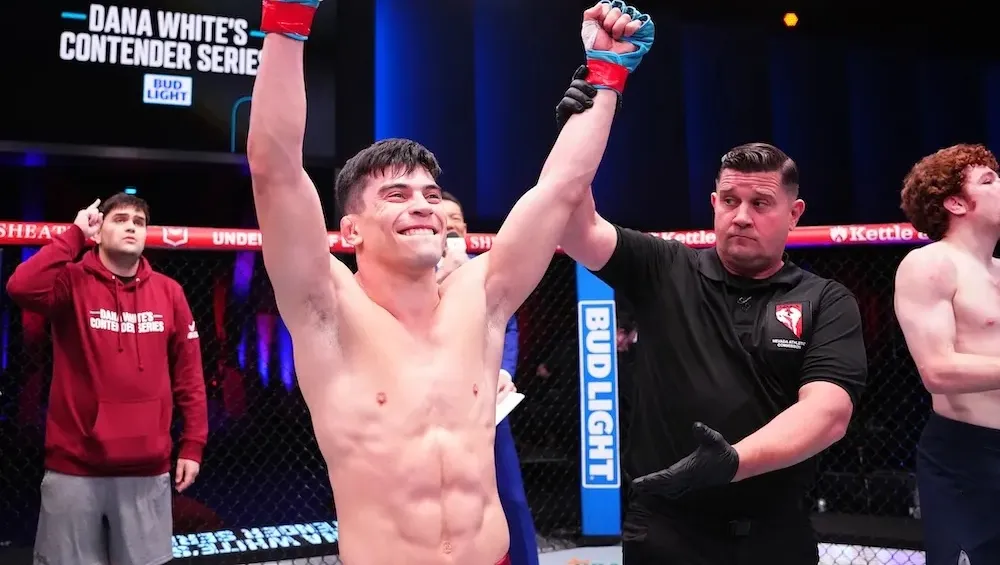
Argentinean UFC fighter Kevin Vallejos as a forerunner
This approach opens exciting possibilities for the sport. Imagine official fan clubs, authentic communities built around fighters, offering exclusive content, Q&A sessions, or even special events. Fans could have a voice, influencing editorial choices or participating in challenges and quizzes. By integrating the community into the narrative, each fight becomes a shared experience—a symbol for the tribe. Adopting a collective “We” could reshape MMA culture: creating engaged fans, building an inclusive and authentic story, and establishing a space where individual and shared victories coexist, where every action of a fighter resonates far beyond the cage.
Kevin Vallejos’ example could signal a new way forward: an MMA where the collective is not peripheral but central to the story. Fan clubs could be limited to a select number of members, emphasizing authenticity and belonging. Narratives could highlight both individual and shared achievements, showing that victories are more than personal—they ripple through the community. “We” is not just a quirky pronoun; it’s an invitation to rethink MMA as a shared, living experience. Vallejos recognized this before many others, and his approach could inspire a new generation of fighters… and communities.
And you? Would you be part of a fighter’s “We”? What would your ideal MMA fan club look like?